Immigration to Oman involves obtaining a residence permit, which is valid for 1 to 10 years, depending on the category. Investors can access a 10-year Golden Residency by investing OMR 200,000 (about $520,000). They can purchase property and government bonds, register a new business, or finance an existing one.
Foreign nationals aged 60 and over who retire in Oman can legalise their status by confirming a monthly income of at least OMR 4,000 ($10,390), while family members of residents and citizens must prove their relationship with the sponsor. Other common grounds for obtaining residency include working in Oman and enrolment in an accredited university. Foreigners may apply for citizenship after 15 years of living in Oman (spouses of citizens sooner).
Content
Pros and cons of moving to Oman
The main pros of moving to Oman include:
- Economic opportunities. The Sultanate has a rapidly developing economy, particularly in energy, logistics, tourism and finance, with a GDP per capita at purchasing power parity of about $46,200 in 2026 (IMF estimate). Conditions for investors and entrepreneurs are favourable, and the banking system is stable. Specialists in high-demand industries can expect competitive salaries and benefits. Additionally, the government actively supports economic diversification initiatives, creating new jobs and streamlining business processes.
- High level of security. The Sultanate is also one of the safest countries in the world due to its low crime rate and stable political situation. In Numbeo's mid-2026 safety index, Oman has 81.7 points and sixth place. Local authorities pay special attention to public order. The population is characterised by friendliness and respect for the law. Violent crimes are virtually non-existent, and corruption is at a minimal level. Tourists and expats can move freely around the country without concerns for their safety, even at night.
- Attractive living conditions. The country is distinguished by its lenient visa regime, high-quality healthcare, a clean environment, and developed infrastructure. Most cities provide comfortable conditions for permanent residence, such as well-maintained roads, modern residential complexes, shopping centres and access to world-renowned brands. The climate of the UAE and Qatar may be too hot for many foreigners. Still, in the sultanate, it is milder due to natural features. In summer, the coast can be hotter than 40 °C, but the Al Hajar Mountains and Salalah in the south are noticeably cooler during the monsoon season. Foreigners can not only rent homes here but also buy them in certain zones; the rules for each country in the region are collected in a piece on whether a foreigner can buy property in the Gulf.
- Tax benefits. One of the main pros of living in Oman is the absence of income tax for individuals and relatively low taxes for businesses, with a corporate tax rate of 15% and a reduced rate of 3% for small businesses. This makes it attractive for highly qualified specialists, freelancers and entrepreneurs who wish to preserve their income. No property tax favourably distinguishes the sultanate from many European and Asian countries. That said, high incomes will be taxed from 2028: 5% on amounts above OMR 42,000 a year.
- Cultural diversity and a thriving tourism industry. The Sultanate combines the traditions of the Arab world with international influence, making life here comfortable for expats. It is characterised by its picturesque nature, featuring deserts, mountains, and coastlines, as well as numerous opportunities for resort holidays, diving, and ecotourism. Foreigners are drawn to trips to the Al Hajar Mountains, safaris in the Wahiba Sands desert, exploring the underwater world of the Arabian Sea, and many other activities. In 2025, about 4 million people visited the country, and tourists spent more than OMR 1 billion.
The disadvantages include the hot climate and strict laws regulating everyday life. Cultural differences and conservative norms may complicate adaptation, especially for women and representatives of other religions.
Popular ways to move to Oman
Employment
To obtain a work residence permit, the employer must apply as the foreigner's sponsor. The document should contain the position and employment conditions. It should be accompanied by an invitation, a letter of commitment to take responsibility, and confirmation of the employee's qualifications and experience. The expat's specialisation must meet the requirements of the position.
This category of residence visa must be arranged before entry. Foreigners cannot obtain it to stay in the country to look for work. The status will be extended with the sponsor's approval. Additionally, if the employer agrees to take responsibility, the employee's family members will also be able to legalise their status.
Investments
The country has an investment legalisation programme. Foreigners can obtain a golden visa by fulfilling one of the following requirements:
- purchasing property in Oman;
- registering a new legal entity or investing in the capital of an existing company;
- buying government bonds.
Since September 2025, an investment of OMR 200,000 (about $520,000) is enough for Golden Residency, and the status is granted for 10 years straight away. Home buyers have also had a short option since 22 June 2026: an owner's residence permit for up to a year, with no minimum property value. The grounds for residency open to foreigners and the cost of each are explained in an article on an Oman residence permit. Golden visa holders can work, run a business, purchase residential and commercial properties, and sponsor close relatives and domestic workers.
Enrolment in an accredited university
A student residence permit is issued to foreigners who have been admitted to a local university or college for the duration of their studies. To legalise, they must provide official confirmation of enrolment in an educational institution.
Foreign students are granted limited work rights upon obtaining the appropriate permit. In some cases, their close relatives may become residents for the purpose of their studies.
Confirmation of monthly income
Retirees aged 60 and over with a monthly income of at least OMR 4,000 ($10,390) can obtain a residence permit. They must provide bank statements for the last 3 months, and a rental contract or certificate of ownership for an apartment or villa in Oman. In some cases, applicants are required to confirm previous residency and work experience in the sultanate of at least 2 years.
Family reunification
Another common ground for legalisation is marriage to a citizen or resident of the country. Applicants must provide a certified marriage certificate, confirmation of the spouse's financial solvency, and information about housing in the sultanate that meets the conditions for family living. Children and parents of the sponsor can also obtain a residence permit under the family reunification programme.
What documents for moving to Oman are required
The documents for a residence permit in Oman depend on its category. The standard package includes:
- a completed application form;
- 2 colour photographs;
- a passport valid for at least 6 months;
- confirmation of the applicant's financial solvency;
- a medical insurance policy;
- information about the place of residence in the country.
The process of obtaining an Oman residence permit
The procedure for obtaining a residence visa for moving to Oman through property purchase includes the following steps:
- Fulfilling investment conditions. Foreigners have the right to own commercial properties, houses, and apartments in Oman, provided they are located within Integrated Tourism Complexes (ITCs) or, since June 2026, in one of four new districts; only ITCs still qualify for Golden Residency. Popular locations include Al Mouj Muscat, Muscat Hills and Jebel Sifah. The applicant selects a property and concludes a purchase agreement with the seller in the presence of a notary. After full payment for the property, they register ownership with the Ministry of Housing and Urban Planning.
- Applying for a golden visa. Investors apply through the electronic portal of the Ministry of Commerce, Industry & Investment Promotion (this is now done on the Invest Oman platform) and pay the state fee and other charges.
- Passing checks. The applicant must undergo a medical examination at a certified clinic in the sultanate to confirm that they do not have tuberculosis, hepatitis B or C, HIV, or other diseases that pose a threat to public health. At this stage, a background check is also conducted, which includes an analysis of the foreigner's legal status (presence of criminal records and offences), financial data, and other relevant information.
- Receiving an ID card. If the application is approved, the investor receives a residence card. When extending the status, the document must be renewed.




How to obtain permanent residence and citizenship in Oman
The country's legislation does not provide permanent residence permits. Residents can regularly extend their temporary status and, after 15 years, apply for citizenship. This period was set by the citizenship law that took effect in February 2025; before that, the wait was 20 years. In effect, these are the Oman permanent residency requirements for anyone planning to stay for good:
- residence must be continuous, with no more than 90 days abroad a year;
- Arabic and a legal income are required;
- previous citizenship is given up, and dual nationality is allowed only by royal decree;
- spouses of Omani citizens have shorter periods.
"The road to citizenship is shorter now, but only continuous residence counts. Spend more than 90 days a year abroad and the count is broken, so people who live between two countries will find it hard to get a passport," explains a migration lawyer from Sohar.
In what cases is a residence permit cancelled
- Absence from the country – if a resident is abroad for more than 6 months without a valid reason.
- Violation of the law – committing crimes, especially those related to fraud, drugs or state security.
- Providing incorrect data – if false or erroneous information was provided when submitting documents.
- Termination of the employment contract – for workers whose residence permit depends on the employer.
- Bankruptcy or liquidation of the company – if the sponsoring company has closed or been declared bankrupt.
- Refusal to renew – if the residence permit holder did not submit renewal documents within the established timeframe.
- Threat to national security – if the resident conducts activities that pose a threat to the country.
- Debts and financial violations – if the residence permit holder has unpaid debts, fines or tax obligations.
Cost of living in Oman
According to Numbeo, as of November 2026, the average monthly living expenses in the country (excluding rent) were OMR 317 ($825) for one person and OMR 1,122 ($2,918) for a family of 4. Renting a 1-bedroom flat in the city centre costs an average of OMR 227 ($590) and OMR 152 ($395) outside the centre. The average cost per m² when buying property in the city centre is OMR 914 ($2,378) and OMR 546 ($1,421) outside the centre. The average net salary is about OMR 669 ($1,740).
| Expenses | Average cost |
|---|---|
| Lunch for 2 persons in a mid-range restaurant | OMR 10 ($26.01) |
| 1 litre of milk | OMR 0.85 ($2.21) |
| A loaf of fresh bread | OMR 0.47 ($1.21) |
| 1 kg chicken fillet | OMR 2.63 ($6.85) |
| 1 kg of apples | OMR 1.23 ($3.20) |
| 1 litre of petrol | OMR 0.24 ($0.62) |
| Gym membership for a month | OMR 24.76 ($64.39) |
| Cinema ticket | OMR 3.69 ($9.60) |
| International School for 1 year | OMR 5,712 ($14,857) |
| Utilities for an 85 m² housing | OMR 49.70 ($129.25) |
| Internet (60 Mbps or more) | OMR 28.98 ($75.36) |
The prices vary depending on location. For example, the cost of living in Muscat is higher than the country's average. The capital is characterised by more expensive goods and services. For instance, a year of education at an international school will cost OMR 6,094 ($15,848). However, there is a wider range of options available, which makes the city a popular destination for relocation.
A monthly budget for a family of four in Muscat with one schoolchild adds up like this:
- Living costs without rent — about $3,130.
- A three-bedroom apartment — about $757 on the outskirts or $1,196 in the centre.
- An international primary school — about $15,850 a year, or roughly another $1,320 a month.
The total comes to $5,200–5,650 a month, while the average salary in the country is about $1,740.
"The school almost always decides both the district and the budget. Families first secure a place at an international school and then look for a flat nearby," says a family relocation specialist in Muscat.
Best cities to live in Oman
- Muscat is the capital and largest city of the country, attracting expats with its high standard of living and developed infrastructure. There are many jobs in the oil, financial, and tourism sectors. One of the main attractions is the Sultan Qaboos Grand Mosque, the largest mosque in the sultanate. For shopping enthusiasts, Oman Avenues Mall is open, one of the largest shopping centres with local goods and international brands. The city is also renowned for its Corniche, a stunning promenade offering breathtaking sea views. It suits families and professionals looking to build a career.
- Salalah is a city located in the south of the sultanate. It is distinguished by its unique climate. In summer, it rains, making the area green and picturesque. This attracts those who find it difficult to tolerate the hot weather characteristic of the central and northern regions. One of the most popular places in the city is the Wadi Darbat waterfalls, which become even more beautiful during the monsoon season. For shopping and entertainment, residents head to Salalah Gardens Mall, which features a variety of restaurants, shops, and leisure establishments. The city suits those who love nature, peace and a measured pace of life.
- Sohar is an industrial centre that contributes to developing the state's economy thanks to the port of the same name, one of the largest in the region. The city combines modern buildings with historical heritage. Sohar Fort, known for its ancient architecture and stunning sea views, and Sohar City Centre, a popular shopping and leisure destination, are situated in the area. Numerous industrial companies attract specialists in logistics, manufacturing and trade.
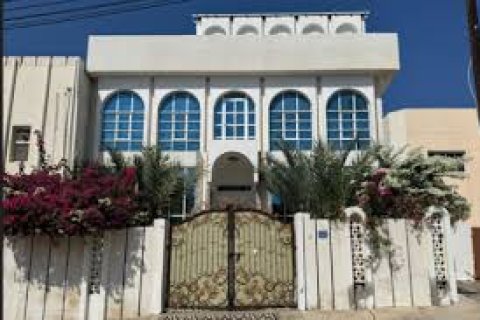
-
$ 226 268

-
$ 205 462
-
$ 286 086
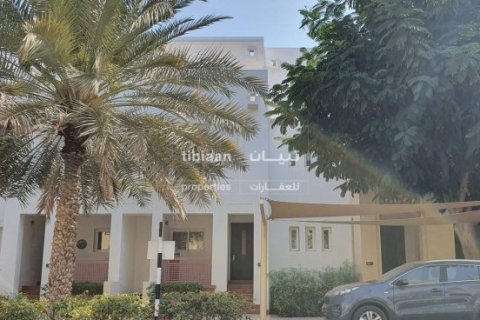
-
$ 494 148



Key points about moving for permanent residency in Oman
- A golden visa is issued for capital investments in real estate, business or government bonds.
- A 10-year Golden Residency is granted for investments from OMR 200,000 (about $520,000); homeowners can also get an owner's residence permit for up to a year.
- Investors can sponsor family members and domestic workers.
- Foreigners can own property only in ITC zones and four districts added in 2026.
- Residents can apply for citizenship by naturalisation after 15 years of living in the country (spouses of citizens sooner).
Moving to Oman: what is new by the end of 2026
Facts verified on 9 November 2026. Since early 2025, the rules for moving have eased noticeably: citizenship now takes 15 years instead of 20, the investment threshold has fallen from OMR 250,000 to OMR 200,000, and homeowners have gained a separate residence permit without a sponsor. Taxes and prices have moved the other way: income tax for high earners arrives in 2028, and according to Numbeo, a family's costs excluding rent have risen from $2,600 to $2,918 a month, while rent for a one-bedroom flat in the centre has gone up from $514 to $590.